Rosewool Insulation Refractory Co.,Ltd.

Manufacturer of ceramic fiber blanket 200 * 61 * 2 for cement kiln insulation material? Ceramic fiber blankets play an extremely important role in cement kiln systems due to their low thermal conductivity, low heat capacity, excellent chemical stability, and thermal shock resistance. When purchasing products with a thickness of 20mm, it is recommended to request the manufacturer to provide a third-party testing report to verify key indicators such as slag ball content, tensile strength, and heating wire shrinkage rate. Also inquire if it supports pre cutting according to the size of 200 × 61cm to reduce on-site losses and improve installation efficiency.
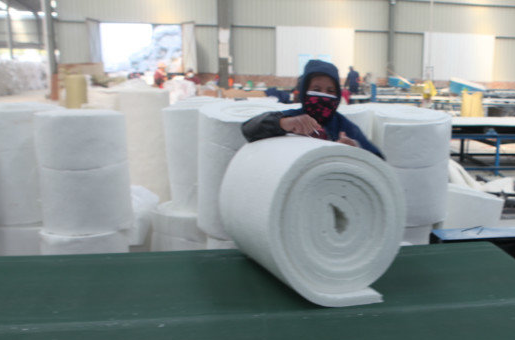
How to choose ceramic fiber blanket manufacturers for insulation materials:
Thickness selection: 20mm (2cm) is a commonly used specification in the cement industry, especially suitable for areas such as rotary kiln barrels, preheaters, and tertiary air ducts that require multi-layer staggered laying or wrapping of irregular parts. A thickness of 20mm balances flexibility and construction efficiency, making it the mainstream choice for cement plants.
Width logic: 610mm (61cm) is the internationally recognized width for ceramic fiber blankets. This design is suitable for the spacing of anchor components in most industrial kilns, effectively reducing on-site cutting losses and improving construction efficiency.
Density suggestion: It is recommended to use 128kg/m ³ for cement kiln blankets. The fiber blanket at this density has both good thermal shock resistance and resistance to airflow erosion, which is beneficial for maintaining structural stability in high-temperature and high dust environments such as preheaters and decomposition furnaces.
Manufacturer of ceramic fiber blanket 200 * 61 * 2 for cement kiln insulation material? Rosewool Insulation Refractory Co.,Ltd. reminds you that in the selection of ceramic fiber blankets, the recommended density is 128kg/m ³, which is the most widely used specification in the cement industry. In terms of thickness, 50mm is used for large-area laying (shell, furnace wall), and multi-layer staggered joints have better effect; Pipes and elbows use 20-30mm, soft and easy to wrap. When purchasing, the manufacturer is required to provide a third-party testing report, with a focus on verifying key indicators such as Al ₂ O3 content, thermal conductivity, and linear shrinkage rate to ensure quality compliance.